Silence is Not Neutral: How the "Silent Treatment" Breaks Bridges
Autor
Melyara Team
Data
Apr 25, 2026
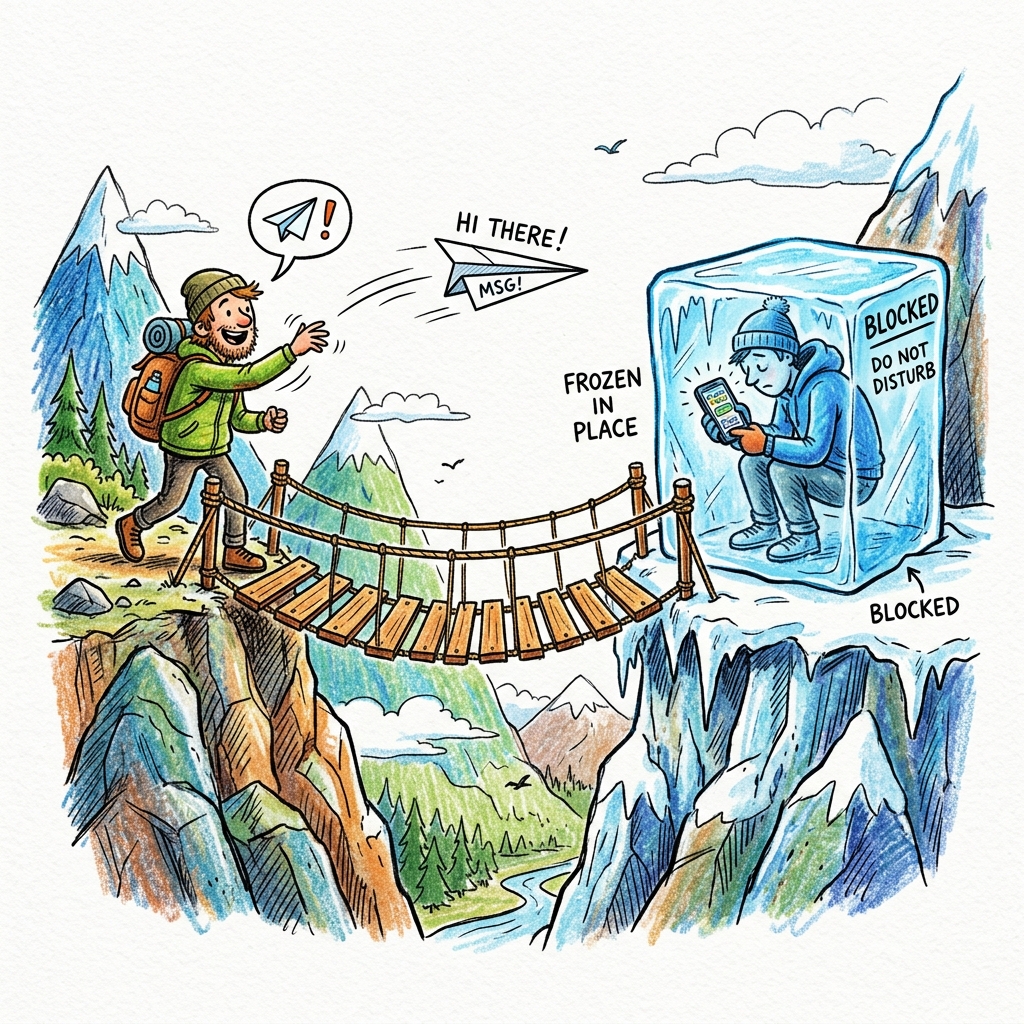
Silence is one of the most complex and powerful tools of human communication. It can be a sacred sanctuary, a space of deep calm, respect, or shared reflection. However, in the context of a relational conflict, silence often transforms into one of the most lethal and silent weapons of communication: what is popularly known as the "silent treatment," the "ice law," or, in technical terms, "stonewalling."
Silence as a Form of Invisible Punishment
Unlike a shout or a heated argument, which are explosions of energy and, therefore, a form of contact (even if destructive), silence is an absolute vacuum. It is a withdrawal of affection and presence that sucks the emotional safety out of the other person. Psychologically, the silent treatment is a form of social ostracism, an exclusion technique that sends a devastating message: "To me, at this moment, you cease to exist."
Neuropsychology studies have shown that being ignored by an attachment figure activates the same areas of the brain as physical pain. Silence is not a neutral or passive act; it is an active form of psychological aggression that seeks control and submission of the other through the induction of anxiety, guilt, and helplessness.
"What is not said does not vanish into the air: it accumulates in the muscles, festers in the chest, and ends up transforming into a chronic resentment that suffocates love."
Differentiating the Pause from the Wall
It is fundamental, for the health of any relationship, to learn to differentiate between the legitimate need for a "time-out" to calm down and the toxic behavior of the stonewall. A healthy "time-out" is an act of emotional responsibility: it is clearly communicated to the other ("Right now I feel very overwhelmed and I cannot talk about this without hurting you; I need 30 minutes of calm and then we resume the talk"). There is a promise of return and an intention of future connection.
Toxic silence, on the contrary, is unilateral, indefinite in time, and is used as a bargaining chip to punish the other. When a couple falls into the "pursuit-withdrawal" dynamic (one needs to talk to calm their anxiety and the other shuts up to protect themselves or punish), the relationship enters a dangerous spiral. The anxiety of the one who "pursues" rises to unbearable levels, leading them to attack harder, causing the "withdrawer" to raise an even higher wall.
Signs that Silence is Damaging Your Bond
- You spend days without talking to each other after a minor conflict.
- You use silence so your partner "learns their lesson" or comes to apologize.
- You feel like you have to walk on eggshells to avoid provoking an emotional closure in the other.
- Communication is limited exclusively to logistical topics (children, food, bills) avoiding the emotional.
- A feeling of deep loneliness appears while being accompanied.
How to Build the Bridge Again
Breaking the cycle of silence requires a conscious effort by both to create an environment of safety where words are not used as projectiles. The one who usually shuts up must learn to express their need for space without disappearing, and the one who usually pursues must learn to give that space without feeling they are being abandoned.
Prolonged silence is the language of the walls that separate us; the honest word is the only material capable of building lasting bridges.
Reconnecting Through Digital Mediation
At Melyara, we perfectly understand the paralysis generated by the fear of saying the wrong word. We know that many times silence is not born of malice, but of an overwhelming inability to manage the tension of the moment. Our platform offers that safe "drawbridge."
By allowing the person who feels blocked to start writing gradually, in the privacy of their own device and without the pressure of their partner's immediate judgment, we are facilitating the melting of the ice. Our AI helps to smooth the edges of the message, ensuring that when the silence is finally broken, it does so not with a bang, but with a clear and respectful invitation to reconnect.